Securing an authoritative pest control service in Springfield stops interior structural damage and halts continuous breeding cycles within regional homes. Subterranean termites, deer mice, and seasonal German cockroach populations compromise wood framing, drywall insulation, and electrical cabling when left unaddressed.

A pest control service in Springfield is a licensed extermination and wildlife exclusion operation that systematically identifies insect or vertebrate infestations, neutralizes active populations, and seals structural breaches across Sangamon County properties.
Every service reflects the same meticulous attention to detail, whether it's a single job or a larger pest control sevice project across Springfield.
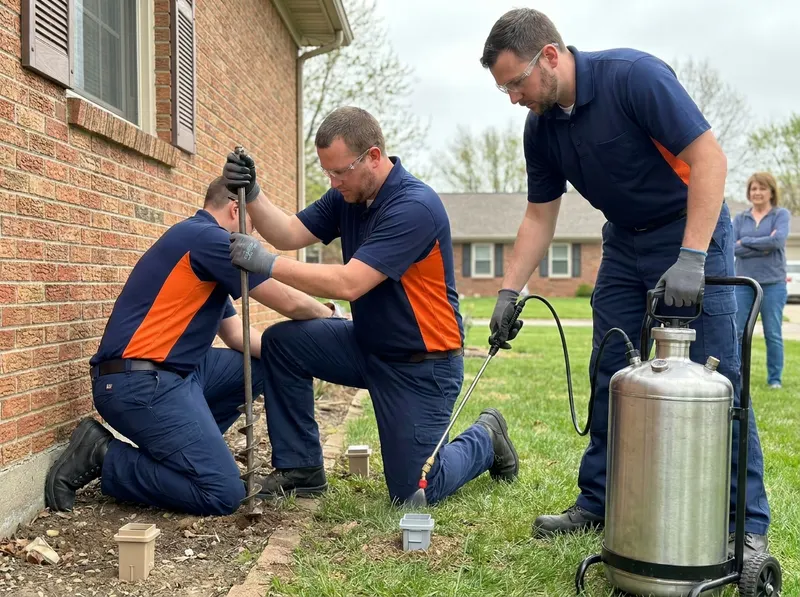
Subterranean termites (Reticulitermes flavipes) cause deep wood rot by building mud shelter tubes over foundation footings to access soft interior sill plates. Remediation requires continuous perimeter trenching 6 inches wide and 6 inches deep around the foundation, applying liquid non-repellent termiticide at a rate of 4 gallons per 10 linear feet. Expansion joints, hollow cinder blocks, and concrete porch slabs undergo direct pressure drilling every 12 inches to establish an uninterrupted subsurface chemical barrier that workers ingest and transfer throughout the subterranean colony.
Get a quote →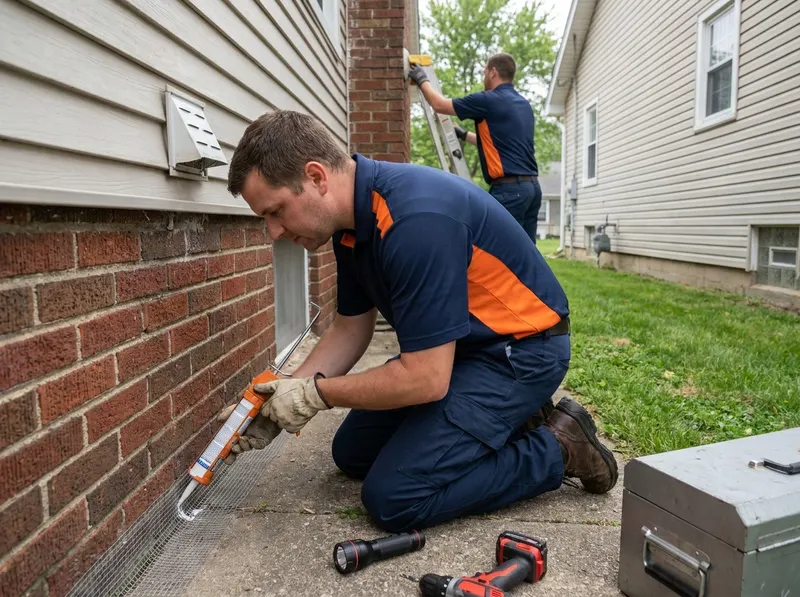
House mice (Mus musculus) and Norway rats (Rattus norvegicus) exploit structural gaps along siding skirts, crawlspace vents, and air conditioner line sets to enter attic insulation and wall spaces. Intervention involves securing exterior gaps greater than 0.25 inches using 16-gauge galvanized steel mesh, copper mesh stuffing, and elastomeric polyurethanes. Technicians deploy covered mechanical snap traps across interior transit routes, monitor daily catch rates, and remove contaminated fiberglass batting to eliminate hantavirus and salmonella health liabilities.
Get a quote →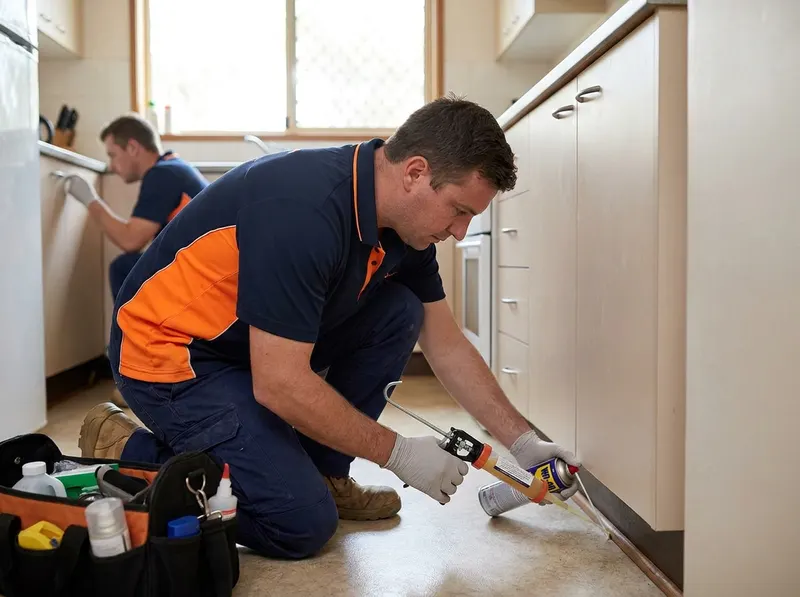
German cockroaches (Blattella germanica) concentrate in kitchens and bathrooms, utilizing moisture zones behind dishwashers, refrigerators, and interior pipe penetrations. Elimination uses targeted fipronil or indoxacarb gel baits applied in micro-dots within structural cabinet hinges, combined with insect growth regulators (pyriproxyfen) injected into wall cavities. This dual-vector strategy halts nymph development, sterilizes adult females, and avoids counter-productive exterior repellent sprays that scatter infestations deeper into residential framing.
Get a quote →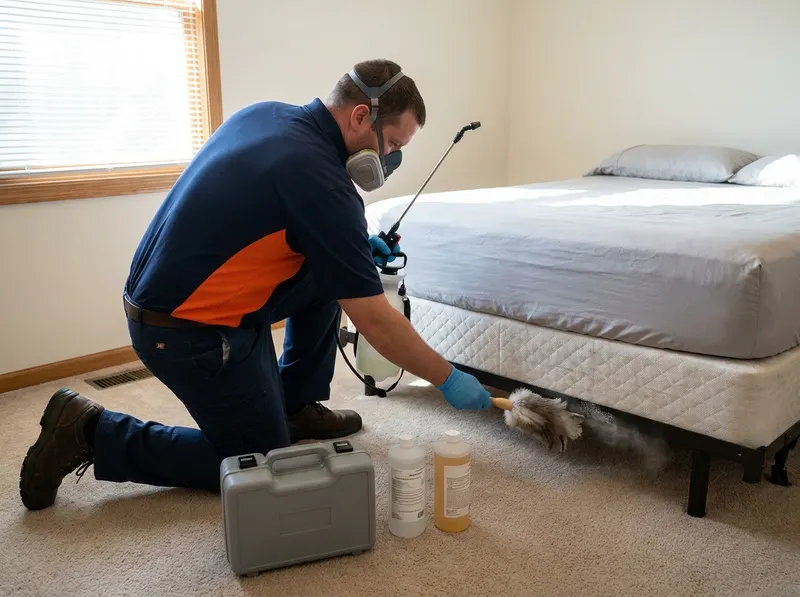
Cimex lectularius colonies nest inside mattress seams, headboards, baseboard crevices, and electrical junction boxes. Eradication combines targeted non-pyrethroid residual sprays with amorphous silica gel desiccant dust injected behind electrical faceplates and molding. This mineral-based desiccant strips the waxy cuticle layer from the insect's exoskeleton, triggering rapid terminal dehydration within 24 to 72 hours across adult bugs, nymphs, and emerging instar stages regardless of synthetic insecticide resistance.
Get a quote →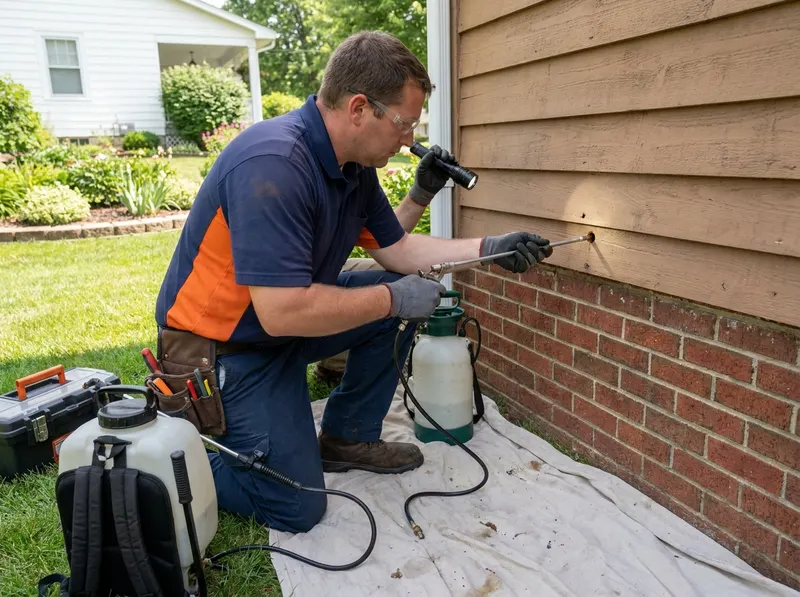
Carpenter ants (Camponotus pennsylvanicus) excavate smooth galleries inside damp structural wood, roof decking, and window headers, weakening building frameworks over time. Eradication identifies moisture sources and delivers dry borate dust formulations directly into active nesting galleries through targeted 1/8-inch drill access holes. Technicians combine this void treatment with non-repellent liquid perimeter exterior applications that foraging worker ants track back into satellite colonies to eliminate the reproductive queen.
Get a quote →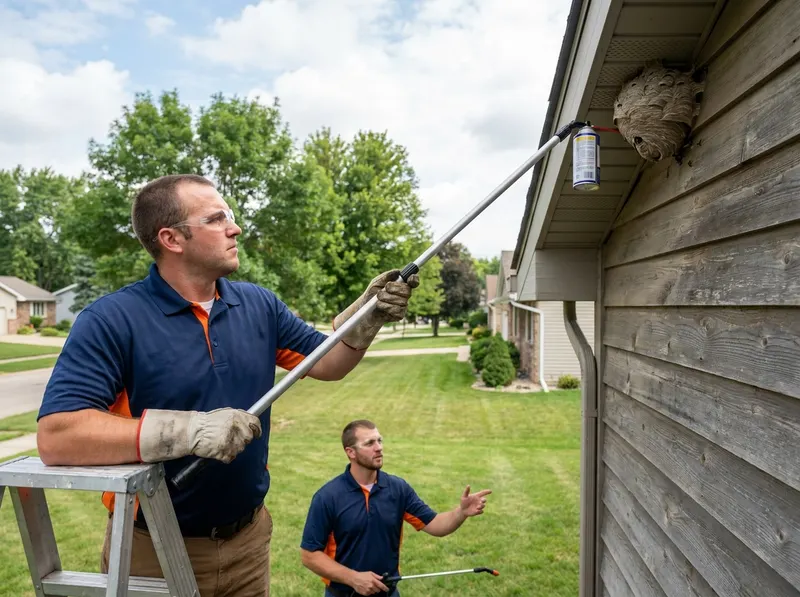
Aerial yellowjackets, paper wasps, and bald-faced hornets establish aggressive carton nests under roof eaves, soffit corners, and structural overhangs throughout midsummer. Removal utilizes high-pressure pressurized aerosol formulations that neutralize defense swarms on contact from a distance of 20 feet. Crews mechanically dislodge and strip the complete papery nest structure, scraping attachment pads and applying micro-encapsulated pyrethroid residuals to repel future queen re-nesting attempts.
Get a quote →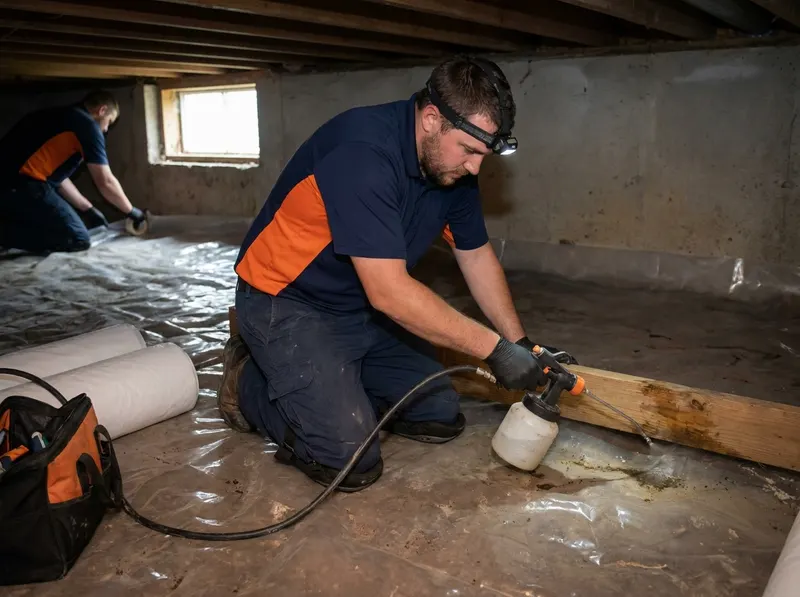
High relative humidity in unconditioned crawlspaces fuels wood-decaying fungus and attracts wood-boring powderpost beetles (Lyctinae). Eradication protocols spray disodium octaborate tetrahydrate (DOT) solutions across subfloor framing, joists, and subflooring at a continuous 15% solution rate, permanently crystallizing inside wood fibers to halt larval digestion. Technicians then grade crawlspace earth, lay 12-mil reinforced polyethylene vapor barriers across 100% of soil, and tape all seams to suppress moisture vapor transmission.
Get a quote →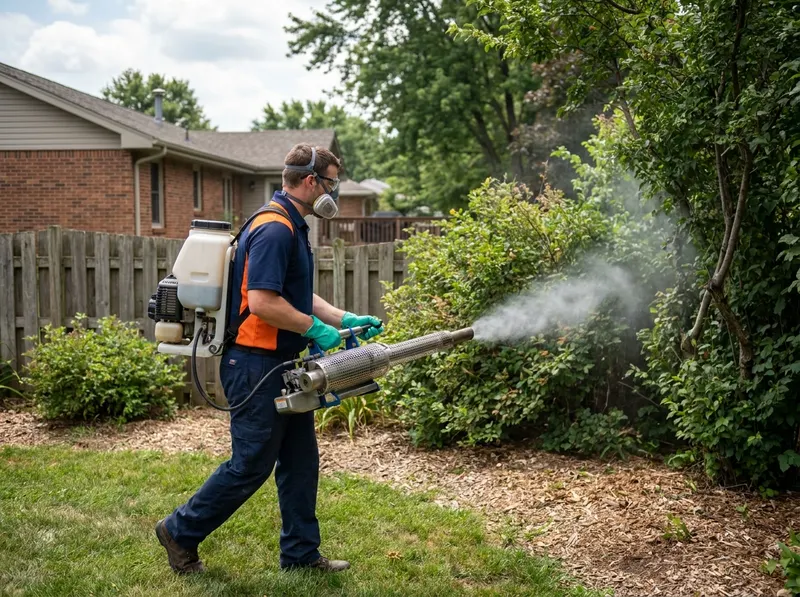
Mosquitoes (Culex pipiens) and blacklegged deer ticks (Ixodes scapularis) flourish in dense ornamental groundcover, shaded brush margins, and unmanaged perimeter turf. Suppression utilizes gas-powered backpack mist blowers to apply micro-encapsulated bifenthrin solutions across the undersides of broadleaf shrubs, perimeter tree canopies up to 10 feet, and perimeter property boundaries. Droplets adhere firmly to foliage, retaining active surface protection across 21 to 30 days of weather exposure.
Get a quote →You get a firm, itemized quote for your pest control sevice before any work begins, no surprises, no pressure.
Careful prep, tidy work, and a full cleanup when we are done. We treat your home and belongings like our own.
The same trusted, background-checked team from the first call to the final check.
Selecting the correct remediation method depends on target species biology, the depth of structural penetration, and property dimensions. If dealing with subterranean termites or powderpost beetles damaging basement joists, select targeted soil termiticide barrier injections combined with sub-slab drill treatments; if addressing surface-level carpenter ants or pavement ants foraging in kitchens, choose non-repellent exterior perimeter liquid applications paired with interior protein bait matrices. The operational trade-off centers on application depth versus material longevity: trench-and-drill termiticide applications require structural alteration and higher up-front material expense to guarantee five to ten years of subterranean defense, whereas perimeter topical liquid sprays demand quarterly re-application because ultraviolet radiation, lawn irrigation, and soil microbes degrade surface active ingredients over 90 days.
For active bed bug populations, direct-contact residual liquid and synthetic desiccant dusting inside wall voids eliminates multi-generational lifecycles without high electric utility costs, whereas thermal heat remediation elevates interior spaces to 122 degrees Fahrenheit for rapid single-day neutralization. The trade-off between chemical residual treatments and thermal heat treatments rests on occupant displacement time versus mechanical prep work: liquid desiccant programs allow residents to re-enter premises after four hours of dry time but mandate targeted follow-up inspections at day 14, whereas whole-structure heat treatments require extensive removal of temperature-sensitive electronics, cosmetics, and aerosol containers prior to equipment activation. For indoor rodent pressure involving house mice or Norway rats, choose multi-catch mechanical traps combined with comprehensive exterior masonry and flashing exclusion over interior rodenticides.
25 inches requires methodical inspection labor but guarantees immediate physical extraction and permanent barrier containment.
Every project gets a firm, written price after a free on-site visit. Ranges below for orientation.
Tell us about your pest control sevice job and we'll send a clear, written quote, usually the same day. Or just call and talk to a real Springfield pro.
(217) 931-1196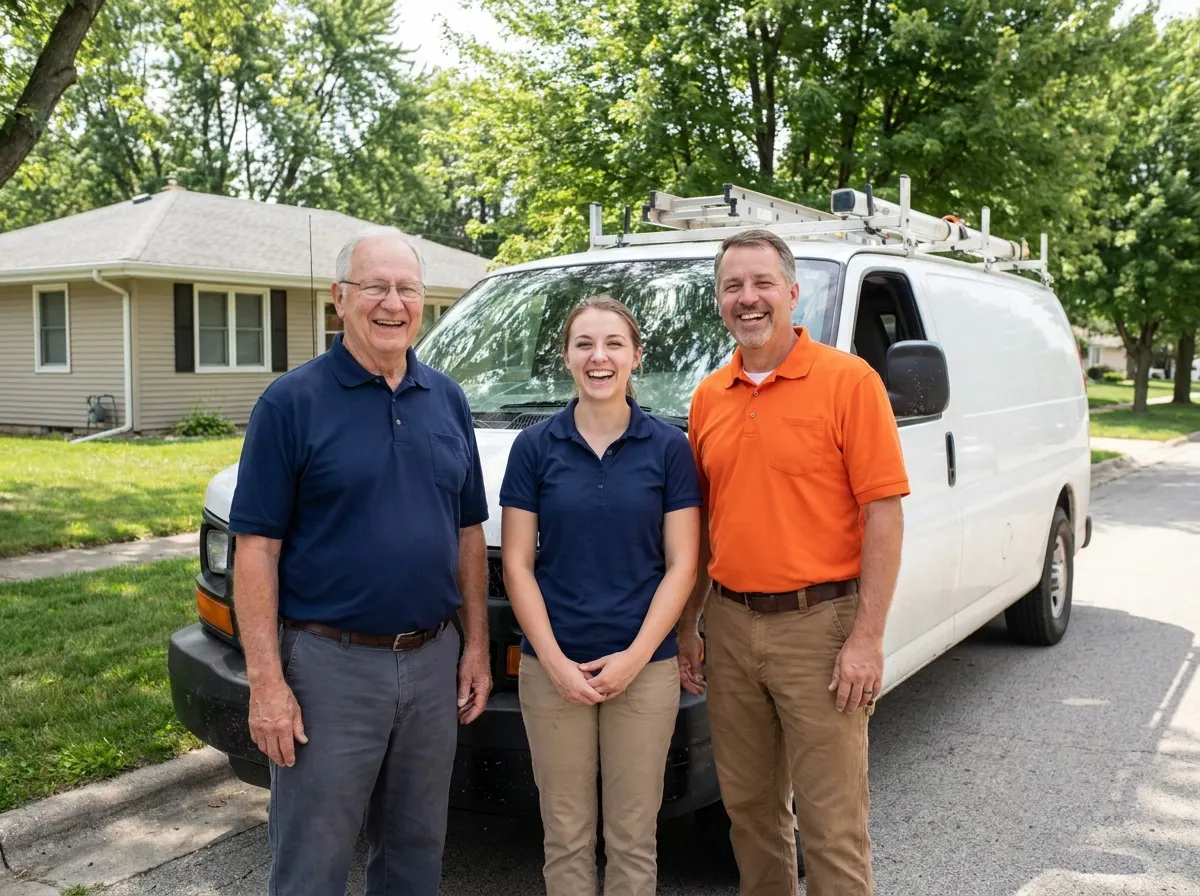
Properties constructed in Historic West Side and Vinegar Hill often feature limestone foundations and aging brick mortar joints that yield readily to burrowing Norway rats and subterranean termite exploration tubes. In low-elevation areas bordering Lake Springfield and the bottomlands near Carpenter Park Nature Preserve, sustained soil moisture keeps subterranean termite colonies active deep into November and drives massive midsummer mosquito breeding cycles across private lots. Modern slab-on-grade builds throughout Koke Mill East and Westchester experience winter mouse incursions through unsealed utility penetrations, requiring thick mechanical escutcheon collars and rigid steel mesh rather than temporary expanding foams.
Free estimates for Springfield & the surrounding area.
 PestBoss Pros