Liquid contact insecticides fail when applied as standalone measures because Cimex lectularius populations have documented metabolic resistance to basic synthetic pyrethroids. Technical eradication protocols combine an…
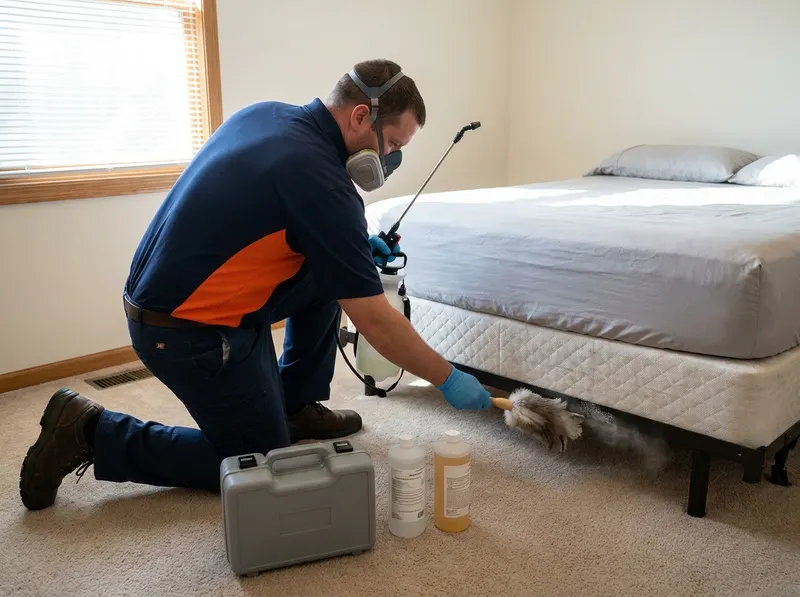
Liquid contact insecticides fail when applied as standalone measures because Cimex lectularius populations have documented metabolic resistance to basic synthetic pyrethroids. Technical eradication protocols combine an active adulticide with an insect growth regulator (IGR) like pyriproxyfen or hydroprene, then anchor the barrier using non-staining amorphous synthetic silica dust. Desiccants operate physically rather than chemically: the synthetic dust adsorbs the protective epicuticular wax layer of the insect, causing rapid fatal dehydration within 24 to 72 hours of contact. In two-story brick and timber properties across the Historic West Side and Vinegar Hill, structural shifts produce deep wall voids and baseboard gaps that act as primary harborages, requiring high-pressure micro-injection equipment rather than generic over-the-counter foggers.
Decision parameters depend on structural construction and unit occupancy. Thermal remediation heats an entire dwelling to 122 degrees Fahrenheit but can fail to penetrate thick concrete subfloors or behind exterior brick veneers found in Enos Park multi-family housing. Synthetic desiccant and chemical injection offers a distinct mechanical advantage in partitioned buildings, duplexes in Hawthorne, and rental layouts throughout Twin Lakes: the electrostatic silica particles remain active within dry wall hollows for over 12 months, creating a permanent lethal perimeter that prevents adjacent apartment re-infestation. The operational trade-off is mandatory resident site preparation: bedding must be laundered at 140 degrees Fahrenheit, clothing bagged, and personal clutter cleared 18 inches away from all baseboard lines before application can commence.
Occupant safety requires strict adherence to technical re-entry timelines. Liquid non-repellent formulations and desiccant dusts are placed strictly into cracks, mattress seams, and structural voids, never broadly applied to exposed sleeping surfaces or pet bedding. Residents and indoor animals must remain off-site for an exact window of 4 hours post-treatment until liquid carriers dry completely. Single-family homes along Koke Mill East, Leland Grove, and Westchester benefit from singular isolated remediation schedules, while multi-tenant structures require simultaneous barrier injections along shared utility corridors to prevent lateral insect migration. Remediation calls are routed directly through operational dispatch via (217) 931-1196 for technical staging.
Every job gets a firm, written price after a free on-site visit.
Tell us about your bed bug chemical & synthetic desiccant eradication job in Springfield and we'll send a clear, written quote, usually the same day.
 PestBoss Pros